AQUACULTURE
- The general word “aquaculture” refers to the commercial, recreational, or public cultivation of aquatic species in regulated aquatic habitats.
- Plants and animals are bred, raised, and harvested in ponds, rivers, lakes, the ocean, and artificially constructed “closed” systems on land, among other water settings.
- The aquaculture-based practice of raising shrimp for human consumption in freshwater or marine habitats is known as shrimp farming.
PURPOSES
- Food production for human consumption,
- Rebuilding of populations of threatened and endangered species,
- Habitat restoration,
- Wild stock enhancement,
- Production of baitfish, and
- Fish culture for zoos and aquariums.

AQUACULTURE INSURANCE
- The financing of aquatic organisms for commercial reasons, such as fish, shrimp, and other aquatic species, is known as aquaculture, and the insurance type that covers and protects those engaged in this activity financially is known as aquaculture insurance.
- Aquaculture operations confront particular risks and problems, which are addressed by this type of insurance.
NEED FOR AQUACULTURE INSURANCE
- Risk Management: Risks associated with aquaculture include illness, unfavorable weather, problems with water quality, and natural disasters.
Aquaculture farmers may suffer large financial losses as a result of these dangers. Insurance offers financial compensation in the event of such unfavorable occurrences, which aids in risk management and mitigation.
- Safeguarding Investment: Insurance protects large infrastructure projects, guaranteeing that the funds invested in the business are shielded against unanticipated circumstances.
- Market Confidence: The availability of insurance for aquaculture has the potential to increase the trust that farmers and investors have in the sector, attracting new investors and operators.
- Sustainability: Insurance can promote the sustainability of aquaculture operations by providing a means to recover from unexpected setbacks, this in turn can encourage responsible and sustainable practices in aquaculture to reduce risks and insurance premiums.
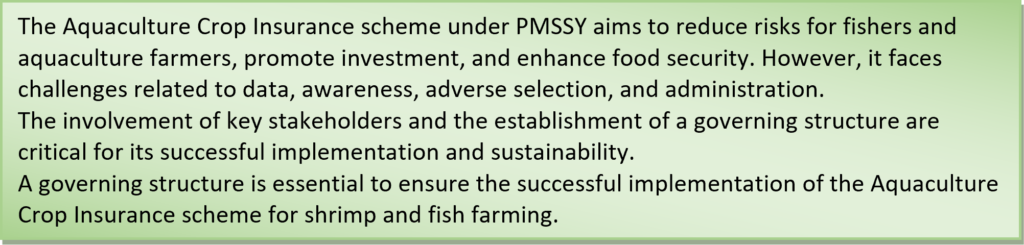
CHALLENGES IN IMPLEMENTING THE AQUACULTURE CROP INSURANCE SCHEME
- Data Collection and Assessment: Assessing the risks and setting appropriate insurance premiums require accurate and up-to-date data.
- Gathering such data for aquaculture can be challenging, as it involves complex environmental and biological factors.
- Awareness and Education: Many fishers and farmers may not fully understand the concept of insurance. Raising awareness and providing education on the benefits and processes of the insurance scheme is essential for its successful implementation.
- Adverse Selection: There is a risk of adverse selection, where only those at high risk choose to participate in the insurance scheme, leading to unsustainable premium levels. Balancing the participant pool to include a diverse range of risk levels is a challenge.
The administration of the insurance scheme, including the timely processing of claims and premium payments, can be operationally complex.
WAY FORWARD