
DIRECT LISTING
- A corporation can list its shares on a foreign stock exchange through a process called “direct listing,” which eliminates the need to raise money from investors or issue new shares.
- The traditional initial public offering (IPO), in which a company sells a portion of its shares to the public and receives money from investors, is not the same as direct listing.
- The depository receipt (DR) route, in which a company offers its shares to a custodian bank, which subsequently issues DRs to international investors, is distinct from direct listing as well.
- DRs are negotiable certificates that represent the underlying shares of the company and trade on a foreign exchange.
- Direct listing allows a company to access a larger and more diverse pool of investors, enhance its visibility and brand value, and improve its corporate governance and compliance standards.
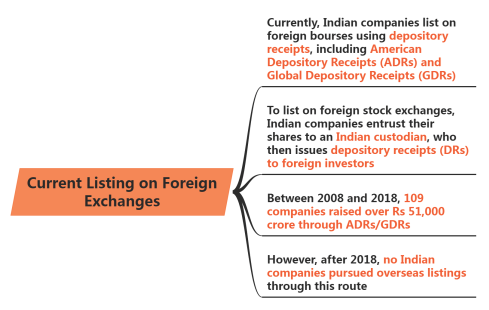
HOW DO INDIAN COMPANIES CURRENTLY LIST ON FOREIGN EXCHANGES?
BENEFITS OF DIRECT FOREIGN LISTING
- Access to a larger and more liquid market, which can increase the demand and valuation of their shares.
- Ability to reach out to a wider and more sophisticated investor base, which can enhance their reputation and credibility.
- Startups and unicorns may benefit from this avenue of raising funds and increasing their global profile.
- Savings on the costs and time involved in the IPO or DR process, such as underwriting fees, listing fees, legal fees, etc.
- Avoidance of the dilution of ownership and control that comes with issuing new shares or DRs.
- Exposure to the best practices and regulations of the foreign jurisdiction can improve their governance and transparency.
CHALLENGES INVOLVED IN DIRECT FOREIGN LISTING