
- Low-emission liquid or gaseous fuels made from renewable energy sources like solar or wind power, water, and carbon dioxide that have been captured are called e-fuels (also known as synthetic fuels) or electrofuels.
- Eg. eGasoline, eDiesel, eHeating oil, eKerosene, e-methane, e-kerosene and e-methanol.
- They provide a drop-in replacement for current engines and infrastructure and can be designed to replace traditional fuels like petrol, diesel and jet fuel.
- In transport, low-emission e-fuels provide a complementary solution to sustainable biofuels.
- Particularly in aviation, e-fuels benefit from their ability to use existing transport, storage, distribution infrastructure and end-use equipment.
eFUELS PRODUCTION
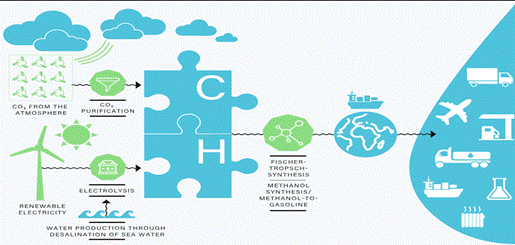
- Hydrogen extraction is the foundation of eFuel manufacturing. This is accomplished using an electrolysis process that separates water into its constituent elements of hydrogen and oxygen, such as seawater from desalination plants.
- In a second process step, with the aid of e.g. Fischer-Tropsch synthesis, the hydrogen is combined with CO2 extracted from the air and converted into a liquid energy carrier-eFuel.
- After processing in refineries, this eFuel can be used as eGasoline, eDiesel, eHeating oil, eKerosene and eGas and can completely replace conventional fuels.
- Moreover, due to their drop-in capability, eFuels can be blended with conventional fuels in any ratio.
ADVANTAGES
- Rapid deployment of low-emission fuels: Significant reductions in fossil fuel demand are possible in road transport through fuel efficiency improvements and surging sales of electric vehicles (EVs).
- E-fuels crucial for deep decarbonization: Fuels obtained from electrolytic hydrogen, or e-fuels, could be a viable pathway and scale up rapidly by 2030, underpinned by a massive expansion of cheaper renewable electricity and anticipated cost reductions of electrolysers.
- Technological and economic viability: current high cost of e-fuels but forecasts substantial cost reductions with technological advancements and economies of scale.
- Infrastructure compatibility: E-fuels can be readily used in existing infrastructure and engines, eliminating the need for extensive infrastructure upgrades that electrification necessitates in certain sectors.
CHALLENGES
- Cost: Currently, e-fuels are significantly more expensive to produce than fossil fuels. However, costs are expected to decrease as production scales up and technological advancements occur by 2030.
- Scalability: Large-scale production of e-fuels currently faces limitations in terms of renewable energy availability and infrastructure for water and carbon dioxide capture.
- Geopolitical implications: Increased reliance on e-fuels may shift dependence from oil-producing countries to countries with abundant renewable resources, potentially creating new geopolitical dynamics.
- Huge investment: Accelerated deployment of low-emission e-fuels for shipping would require significant investments in refueling infrastructure and in vessels.
Achieving a 10% share in shipping would require around 70 Mt/yr of e-ammonia or methanol. This is 3.5 times the current global traded volume of ammonia or two times the trade in methanol.
- Access to CO₂: It is an important constraint to carbon containing low-emission e-fuels.
The best wind and solar resources are not necessarily co-located with significant bioenergy resources, which puts additional constraints on siting e-fuel projects that require carbon input.
SCALING UP E-FUELS: MEASURES TO UNLEASH POTENTIAL
COST REDUCTION
- Policy support: Governments need to take bolder actions in carbon pricing mechanisms, tax breaks, and subsidies that can incentivize e-fuel production and make it competitive with fossil fuels.
- Technological advancements: Research and development efforts targeting more efficient electrolysis, carbon capture, and conversion technologies can significantly reduce production costs.
- Economies of scale: Investing in large-scale production facilities can leverage economies of scale and bring down e-fuel prices closer to fossil fuels.
INFRASTRUCTURE DEVELOPMENT
MARKET CREATION AND DEMAND STIMULATION:
- Public procurement: Governments can create demand by mandating e-fuel blends in public transportation fleets and aviation fuel.
- Corporate commitments: Airlines, shipping companies, and fuel suppliers can set ambitious targets for e-fuel adoption, driving market demand.
REGULATORY AND POLICY FRAMEWORK
- Carbon-neutral fuel standards: To enable widespread adoption, e-fuels will need to meet internationally agreed technical and safety standards for measuring life-cycle GHG emissions.
- International cooperation: Global collaboration on research, development, and policy frameworks can accelerate e-fuel innovation and deployment.
